
From Photo to Map: Coastal Drone Mapping at Flying Point Beach
Many people know Gaia Aerial Imagery for the photography — the wide, clean aerial shots of Long Island's coastline. But photography is only half of what we do. The other half is photogrammetric mapping: turning a drone flight into precise, high-resolution data that can be measured, compared, and tracked over time.
This post walks through what that process looks like, using a recent flight over Flying Point Beach as an example.
It starts the same way every flight does
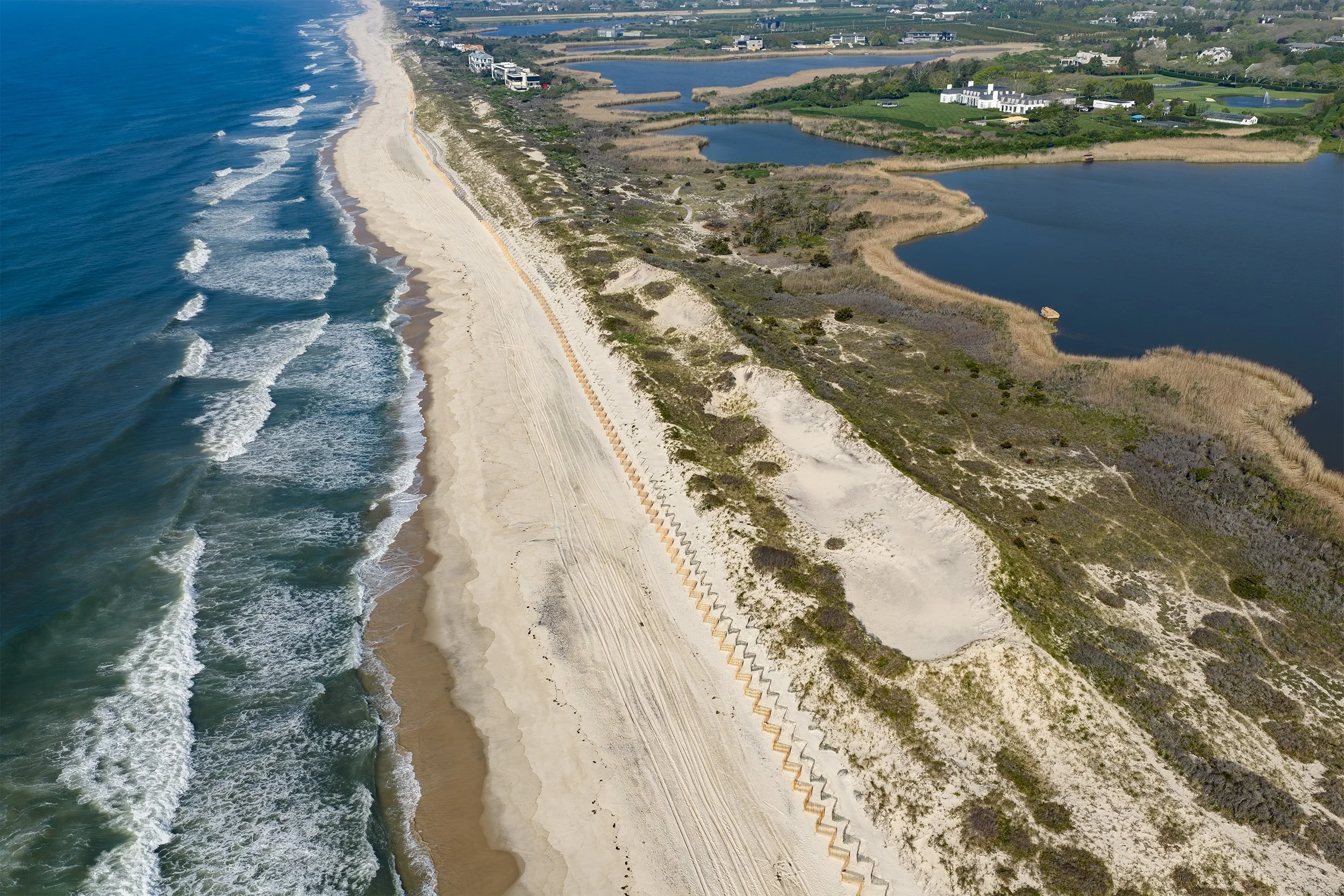
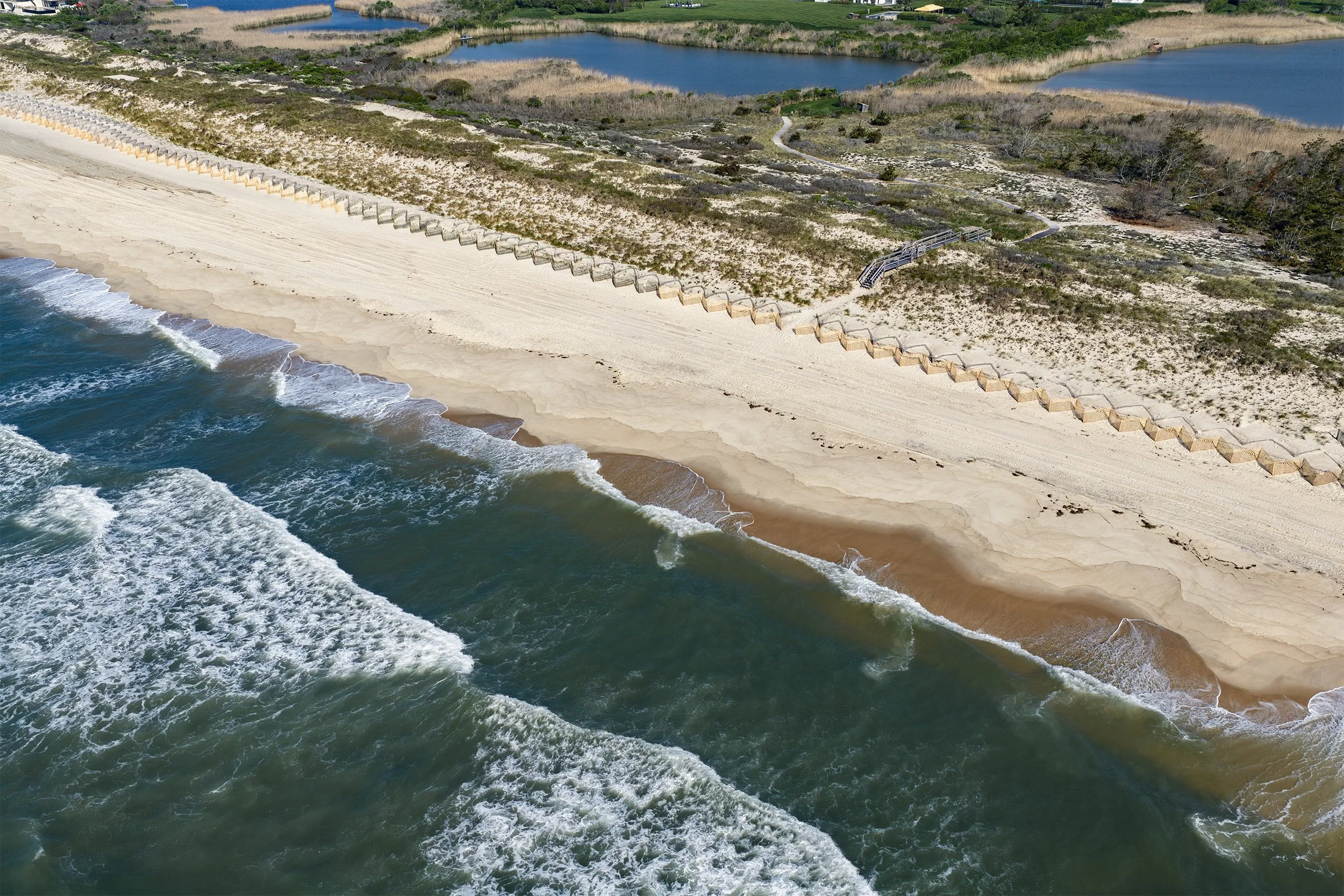
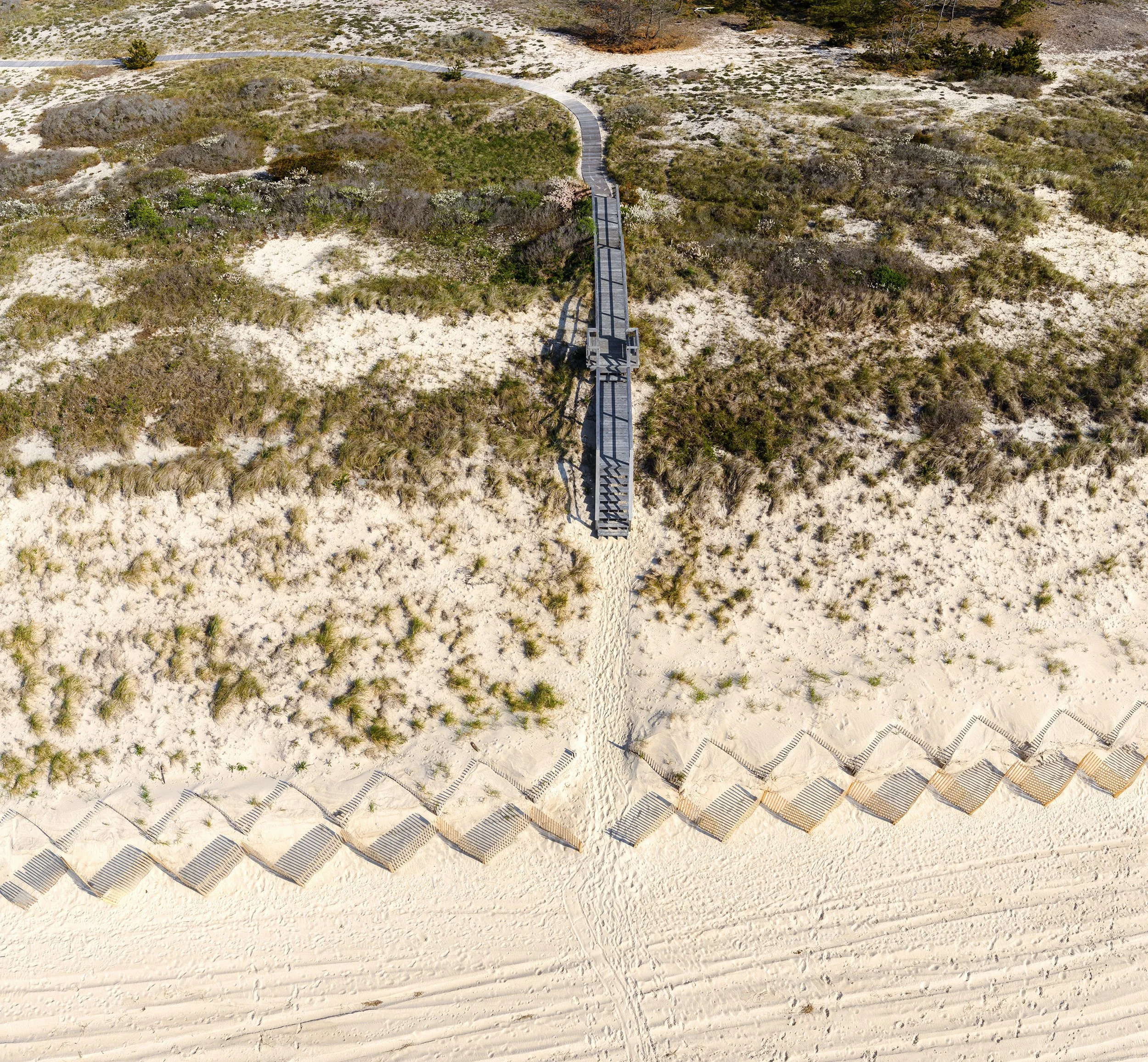
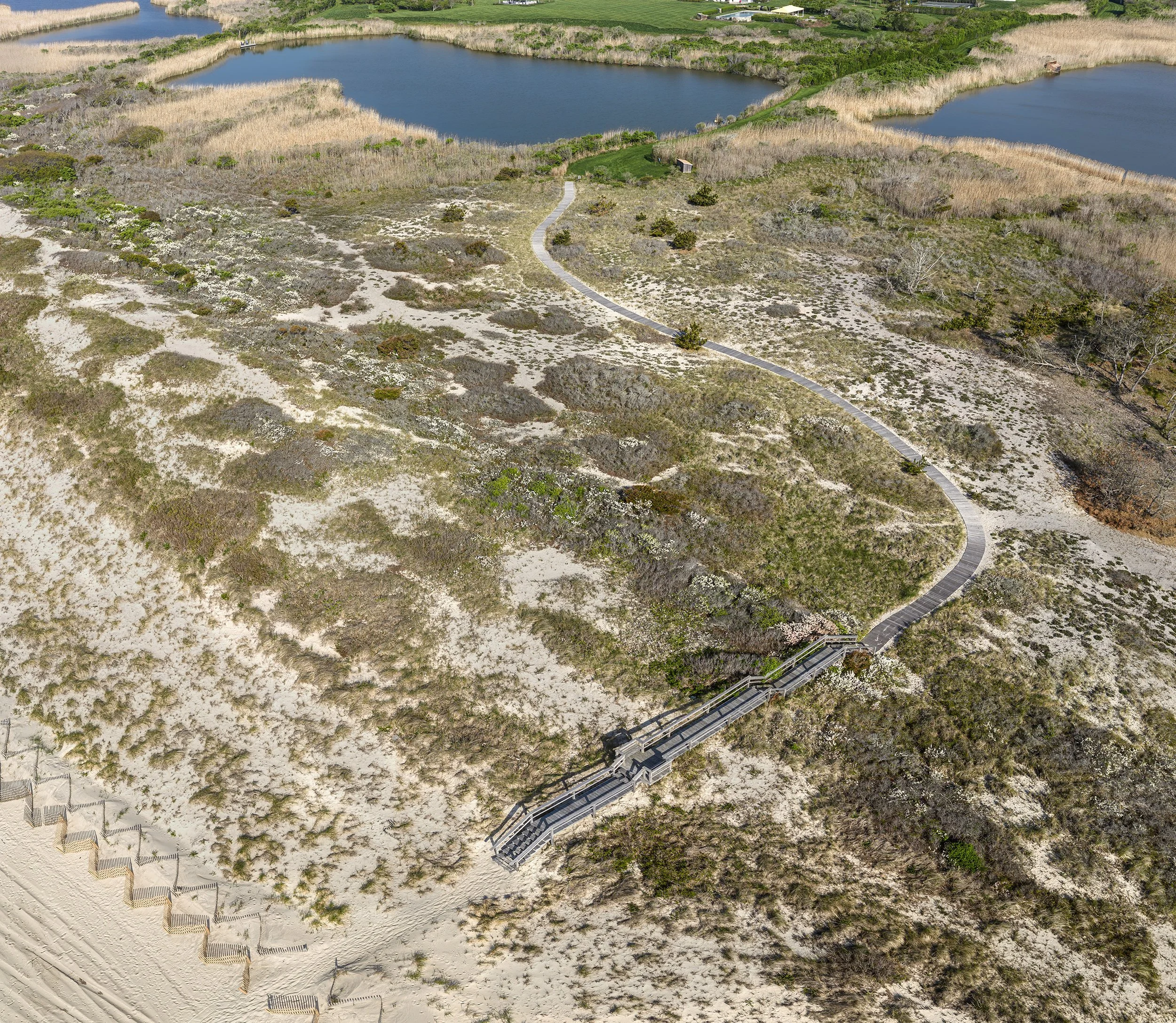
Every project starts with images like these — a single, striking aerial view of the coastline and its unique features. These are the kinds of photographs that stand on their own, but they are also just the first output of a much larger dataset.
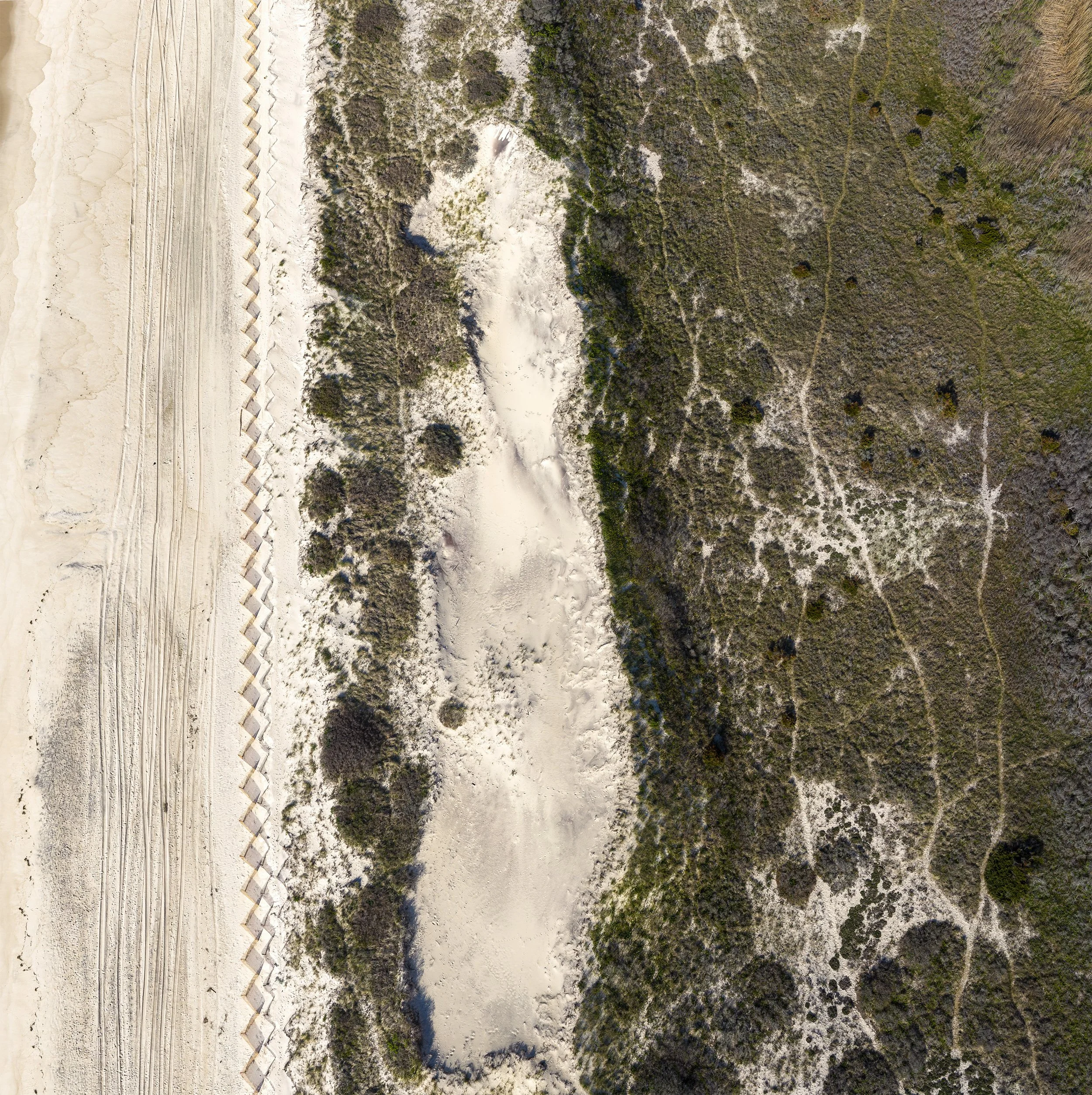
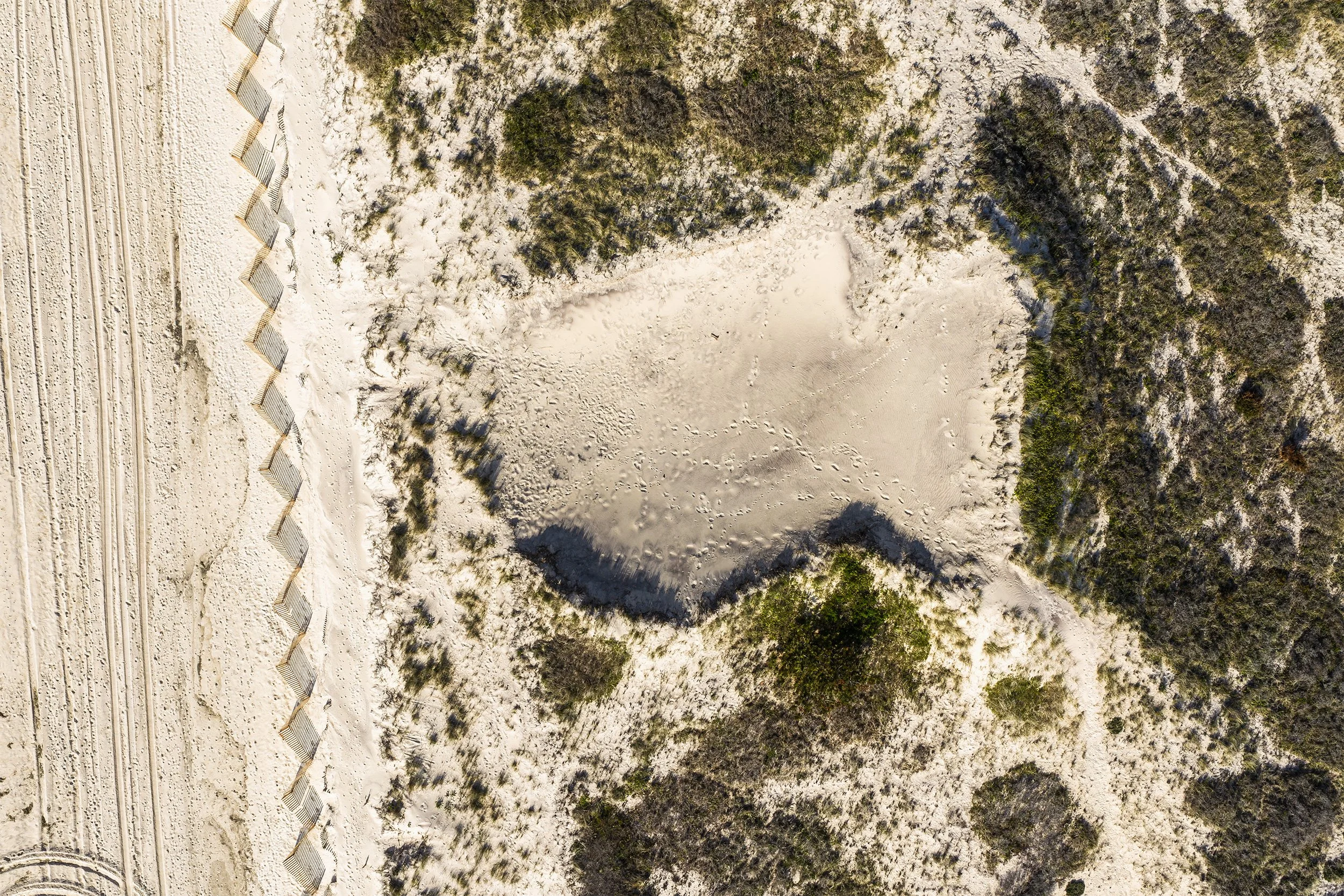
Hundreds of photos, one map
To generate a mapping product, we don't take a single photo — we fly a structured grid pattern over the site, capturing several hundred overlapping aerial photographs. Specialized photogrammetry software then aligns those images together into a seamless, georeferenced map called an orthomosaic.
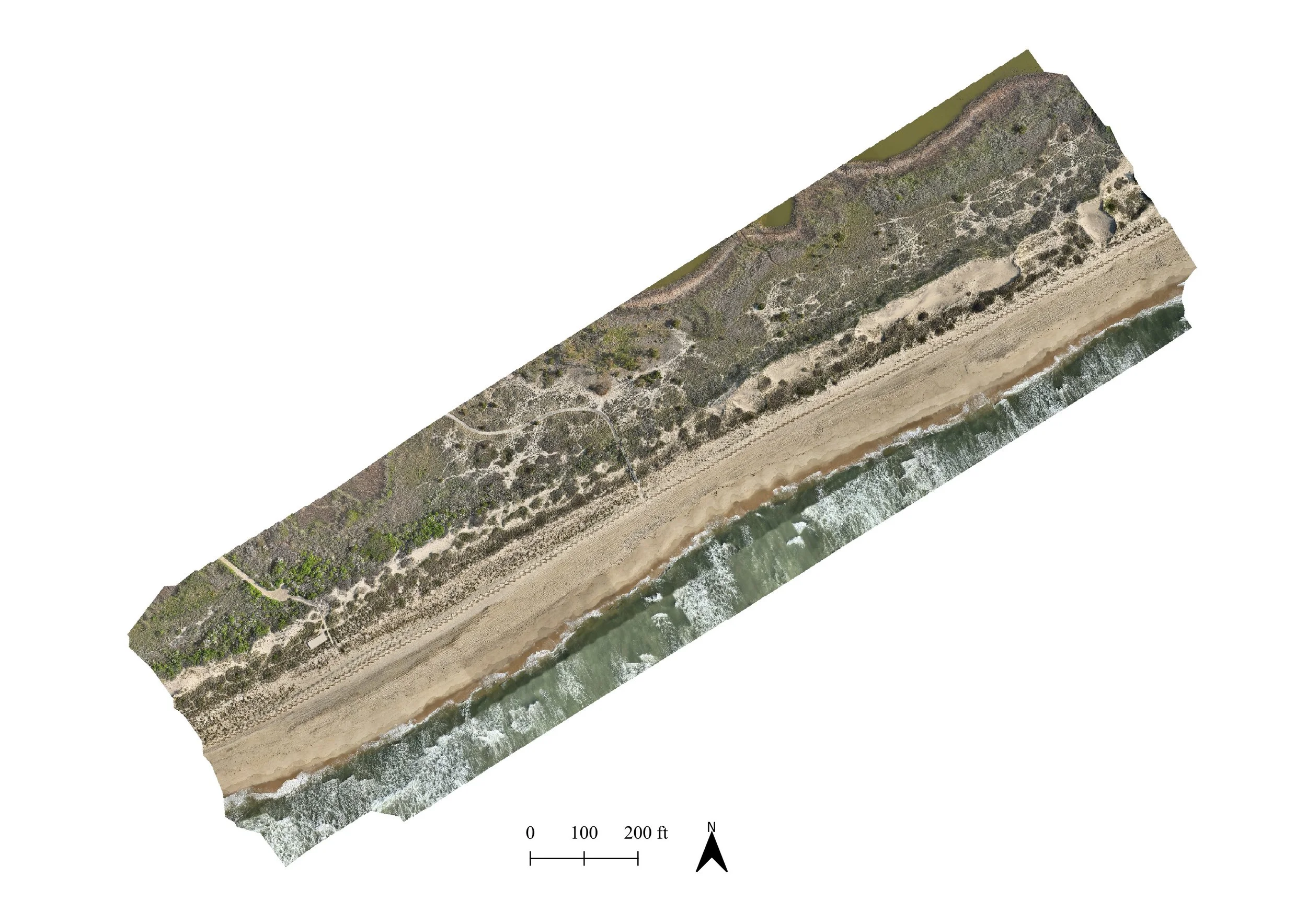
The result looks like a single photograph, but it isn't one. It's a mosaic that’s corrected for lens distortion and camera perspective, and georeferenced to a project coordinate system. Because every pixel has a spatial location, the imagery can be measured, integrated with CAD and GIS data, and compared with imagery collected from the same site months or years later.
Turning imagery into terrain data
The orthomosaic is the foundation. From there, we generate a digital elevation model (DEM)—a modeled representation of surface elevation derived from the same imagery using photogrammetric processing.
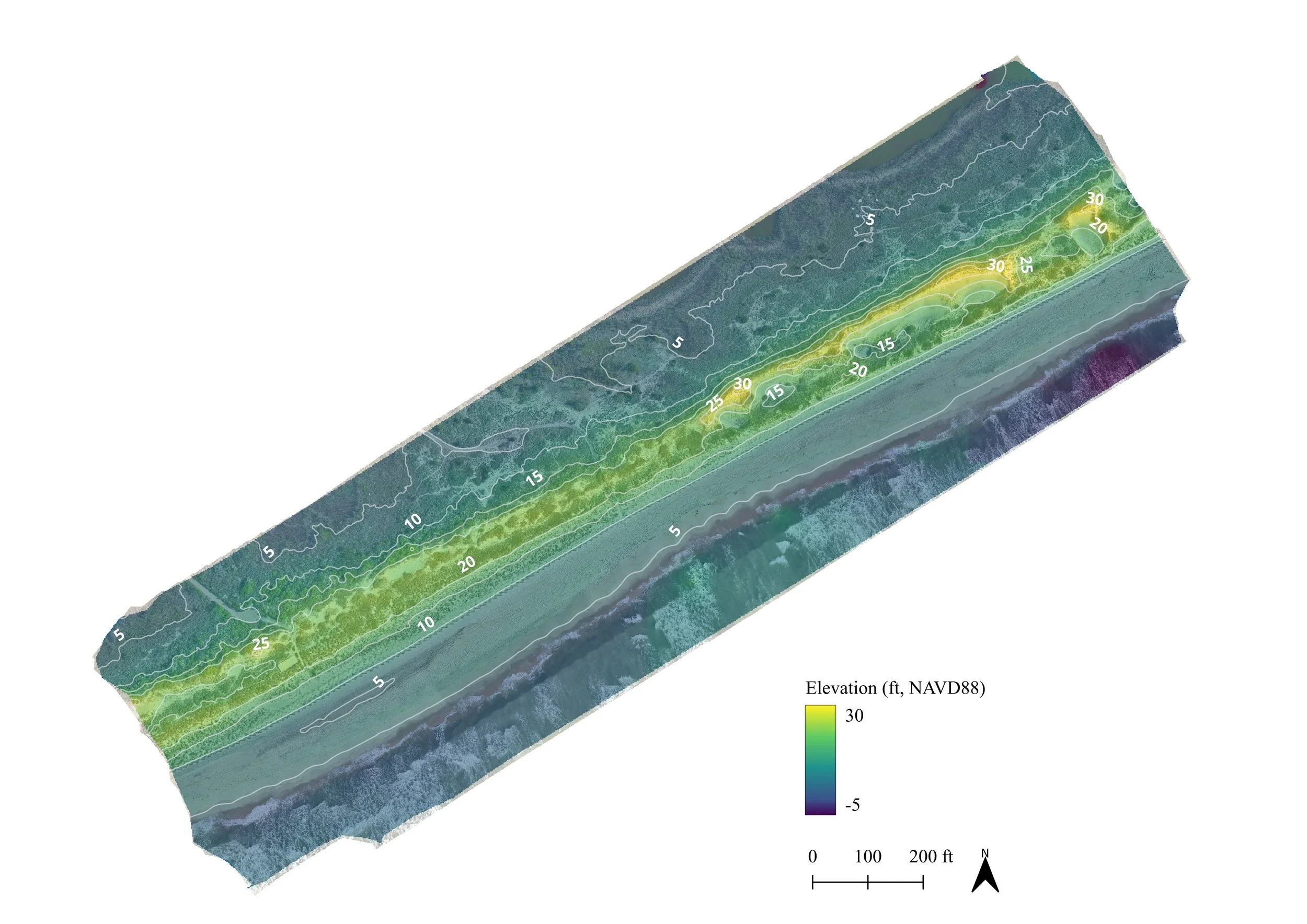
Here, color does the work that words can't. Blues and greens represent lower elevations, including the beach face and wetland edges. Yellow highlights the highest portions of the frontal dune, reaching more than 30 feet above sea level in some locations. Terrain contours derived from the elevation model help visualize changes in topography and provide another way to under stand the site’s surface.
These mapping products support coastal monitoring, engineering planning, environmental documentation, and GIS analysis. They are not intended to establish property boundaries or replace the work of a licensed land surveyor.
This is the layer that answers one of the most important questions in a coastal monitoring project: is the dune growing or shrinking, and where? By collecting comparable datasets over time, changes between successive elevation models can be analyzed to quantify patterns of sediment gain and loss. That information can support grant applications, storm impact assessments, restoration planning, and long-term shoreline management.
Reading the site
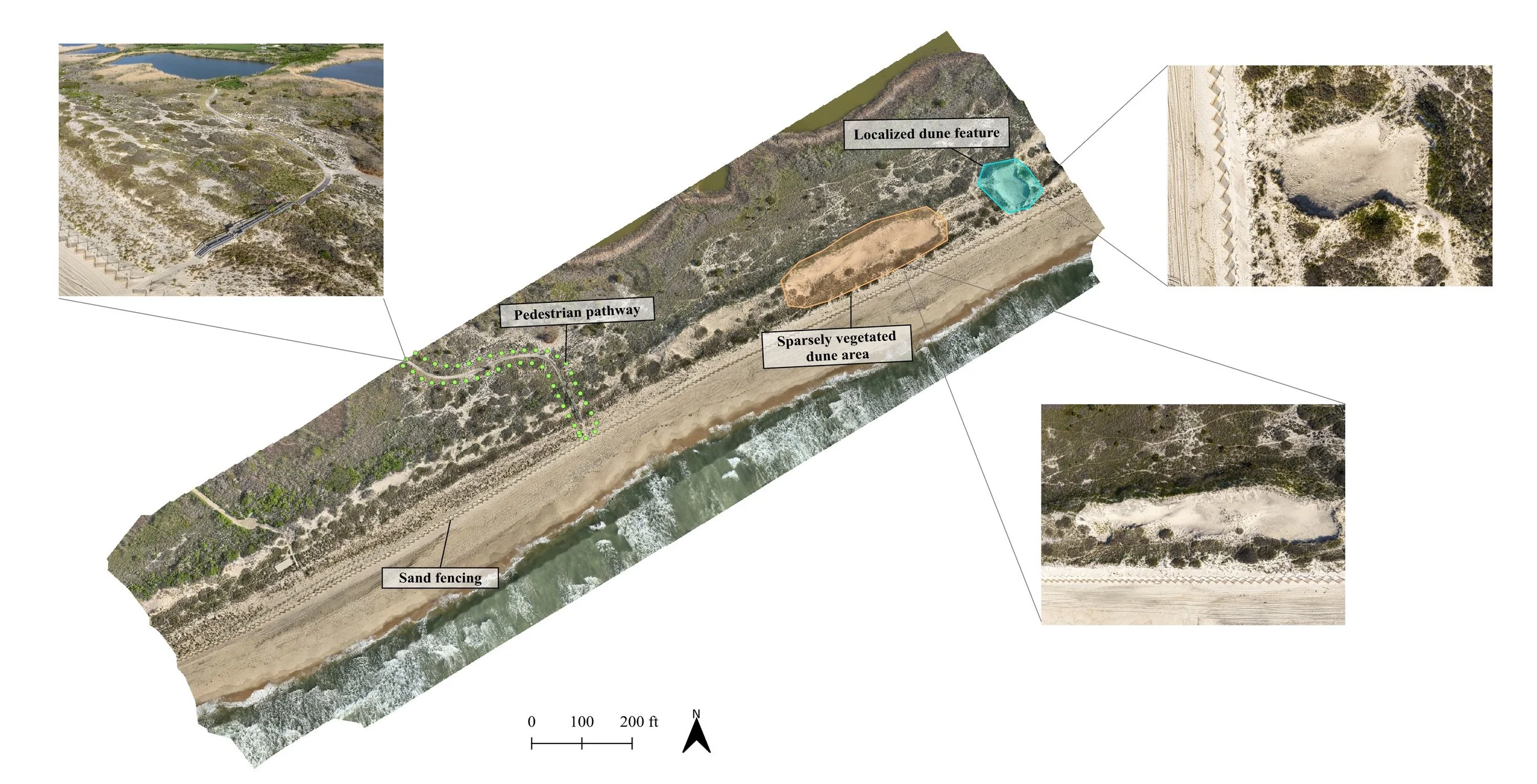
The final step is interpretation—annotating the mapping products with the features that matter for the project.
At Flying Point Beach, that meant identifying the pedestrian pathway through the dune, the sand fencing installed to trap wind-blown sand and encourage dune growth, and several localized dune features worth monitoring over time. This annotated version is closer to what a client actually receives—not simply a map, but mapping products interpreted within the context of the site’s management goals.
Why this matters
Long Island's coastal environments are changing rapidly. Storms, sea level rise, and everyday human activity continually reshape the shoreline. A single aerial photograph can show what a dune looks like today. A repeatable photogrammetric mapping workflow can show how it is changing over time—the difference between a compelling image and actionable spatial data.
That's the service behind the photography: structured RTK-enabled drone mapping missions processed into orthomosaics, elevation models, and terrain products that help conservation organizations, engineers, municipalities, and environmental professionals better understand and manage changing landscapes.
If you're planning a coastal monitoring, habitat assessment, shoreline change, or restoration project on Long Island, I'd be happy to discuss how a drone mapping workflow could support your goals.